Most of our work is long-term: we design, build, host and maintain platforms for clients who want one team taking care of the whole thing. But sometimes a project doesn't need a long-term partner. It needs an extra pair of experienced hands, for a few weeks, to get something across the line.
That's what Hejj.io needed.
Who is Hejj.io?
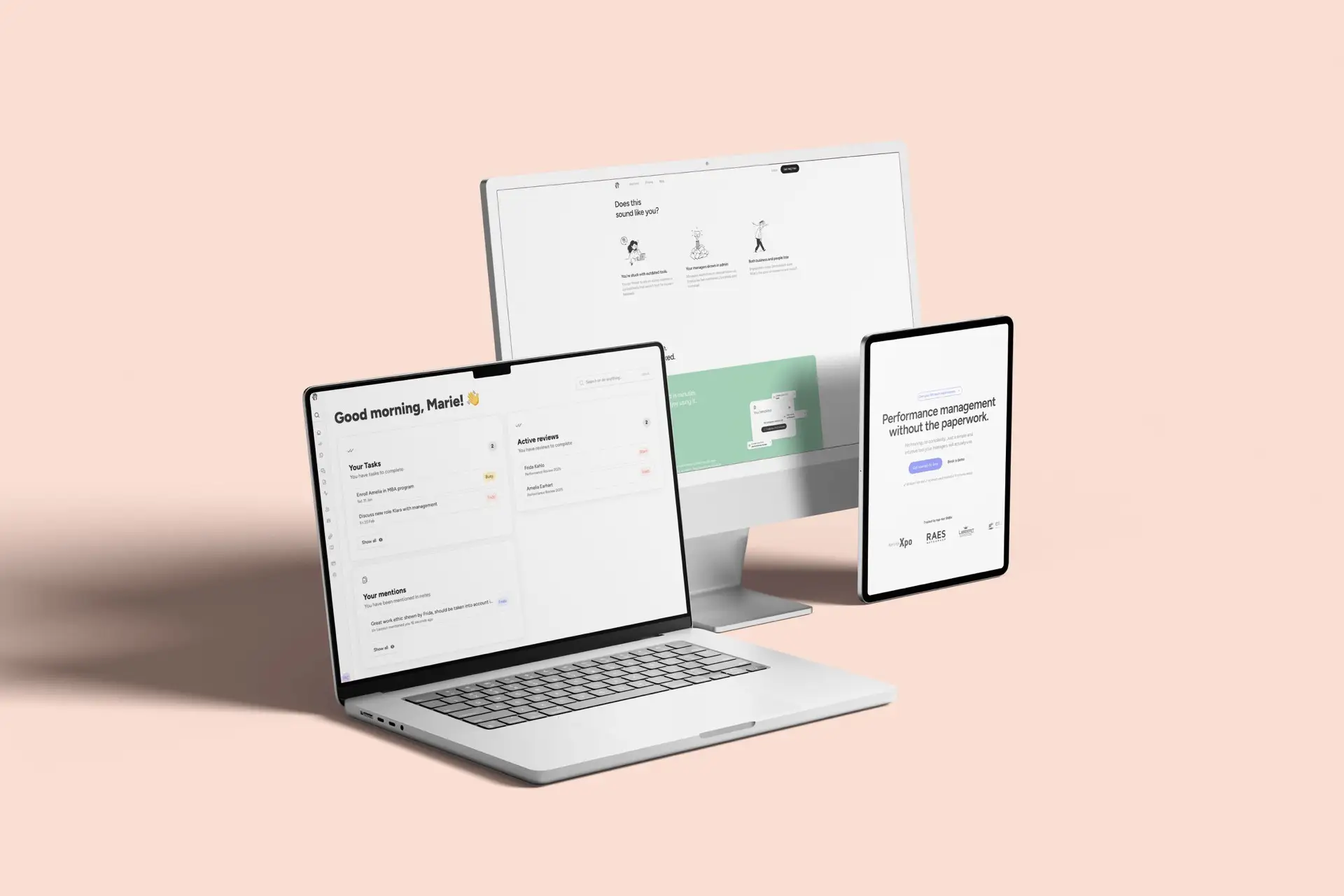
Hejj.io is a performance and feedback platform that helps organisations structure goals, follow-ups and continuous feedback within teams. Companies use it to monitor employee performance, set development goals, and run regular feedback sessions, the kind that build healthier teams when they actually happen and weaken them when they don't.
The challenge
Hejj's internal team had built the platform. The launch date was set. The product worked. But the front-end still needed targeted work, screens to refine, components to harden, edge cases to handle, and the team didn't have the bandwidth to do it without pushing the launch back.
Pushing a launch is expensive in ways that aren't always obvious. Momentum, marketing alignment, internal buy-in, customer commitments. Sometimes the right answer isn't "slip the date", it's "bring in extra hands and ship".
What we built
We didn't build the platform. We joined the team that was building it.
Our work focused on front-end development, implementing and refining existing screens and components, making the interface consistent and responsive, getting it production-ready. We worked alongside Hejj's internal developers, both remotely and on-site, so feedback loops stayed short and decisions could happen in the room.
The pattern was less "deliver a thing" and more "join the work and ship faster together". We picked up tickets, integrated into their workflow, and treated their codebase like our own.
The result
Hejj.io launched on schedule with a front-end that meets the platform's functional and visual standards. Their internal team didn't burn out getting there. The work we did was visible in the product but invisible in the seams, which is exactly how consultancy support should feel when it's done right.
Why this matters
We share this case because it shows a side of Vulpo that's easy to miss in our other work. Most of our projects are end-to-end builds. But when an existing team needs targeted reinforcement, for a launch, a deadline, a sprint, a specific gap, that's also something we do. Project rescues sit at one end of that spectrum; launch sprints sit at the other. Both are about meeting a team where they are.